


Canada
Overview and productions
After decades of growth — driven mostly by US film and TV projects crossing the border to take advantage of a reliable tax credit system, extensive infrastructure and favourable exchange rates — Canada’s production industry took a big hit from the 2023 Hollywood strikes and cutbacks by US streamers.
Recovery has been slow, but there are signs that activity in ‘Hollywood North’, as Canada was tagged in its boom years, is once again on the upswing.
According to the most recently available figures from national advocacy organisation the Canadian Media Producers Association (CMPA), total production volume in the country during the year to March 31, 2025 was up 4.6% to $7.4bn (c$10.2bn).
Foreign location and service production during the year, most of it on US projects, increased by 9.5% to $3.7bn (c$5.3bn), reports CMPA. The only decline was in the overall value of projects made under Canada’s 50-plus co-production treaties, which was down 17% to $208bn (c$285m).
In British Columbia (BC), the country’s busiest hub, total 2024-25 production was up 13% to $2.2bn (c$2.98bn), according to Creative BC, and foreign location and service production increased 22% to $1.8bn (c$2.53bn). Among projects recently shooting in the province have been Disney’s big budget Tron: Ares, A24’s sports bio-drama The Smashing Machine, Netflix romcom Voicemails For Isabelle and the latest seasons of drama series The Last Of Us and Shōgun.
East coast hub Ontario, which for 2024 reported a 39% jump in total production spending to $1.9bn (c$2.6bn), has recently hosted Frankenstein, the latest shoot in provincial capital Toronto by Guillermo del Toro, Searchlight Pictures horror comedy Ready Or Not 2: Here I Come, Michael Cera-directed indie comedy Love Is Not The Answer and The Handmaid’s Tale spinoff series The Testaments.
Projects shooting in Quebec, the centre of Canada’s French-language industry, have included Berlin Silver Bear winner Nina Roza, Sundance 2025 prize-winner Two Women and breakout streaming series Heated Rivalry.
Filming in growing hub Alberta, meanwhile, have been A Long Winter, Andrew Haigh’s upcoming drama for Film4, Lynne Ramsay’s Die My Love and Universal Pictures’ romantic drama Reminders Of Him.
Taking Noomi Rapace drama In Alaska to Canada had creative and financial benefits for Dutch producer Marc Bary. Though its story of a teen ‘terrorist’ and an FBI agent is set in the US state of Alaska as well as Canada, the official Netherlands-Canada co-production, with Bary’s IJswater Films as lead producer, shot in British Columbia and the mostly Indigenous far north Canadian territory of Nunavut. Experimental Forest Films and Uuktumiaq Studios served as Canadian producers, with Jaap van Heusden directing and Vinnie Karetak as co-director.
Gallery
Regional offerings
Quebec, home of Canada’s French-language film industry, also saw an increase in international feature spending last year — from $350m to $392m (c$470m to c$526m), according to the Quebec Film and Television Council — and local officials have been working to assure US producers that a new law to protect the use of French in the province will not apply to incoming film projects.
Quebec’s feature intake has included A24’s Joaquin Phoenix horror-comedy Beau Is Afraid; Paramount franchise instalment Transformers: Rise Of The Beasts; and indie crime drama To Catch A Killer, set in Baltimore but shot in Montreal, Quebec’s most populous city.
To Catch A Killer producer Aaron Ryder suggests that sub-$20m projects like his fit Quebec better than the busier Canadian hubs. “There’s a great incentive,” says Ryder of the province, where he has shot two previous projects. “There’s a lot of stage availability and the post-production is exceptional.”
Whether the flow of production into Canada will continue to grow could depend on several factors, both external and internal.
Streaming correction has seen Netflix and other US platforms cutting jobs, and spending could, at some point, result in fewer streaming projects crossing the border from the US to shoot in BC, Ontario and Quebec. And a US writers’ strike, or the threat of one, might lead to a slowdown in incoming production during the second half of 2023.
In the longer term, Canada’s wide-ranging Bill C-11 legislation — still being debated at press time but expected to pass by mid-2023 — could change the dynamic that helped create the Canadian production boom. The legislation would require big tech players offering streaming services in Canada to contribute to Canadian production, and US officials have suggested it would discriminate against US companies
Infrastructure and crews
Canada’s two-decade production boom has created an experienced workforce, with film and TV technicians union IATSE now representing 36,000 workers in the country, mostly based in the three production hubs that account for the bulk of the industry’s infrastructure.
On the Pacific coast, BC has around 2.3 million square feet of studio space, with purpose-built facilities including Canadian Motion Picture Park Studios, where Netflix has a long-term lease on seven stages; Vancouver Film Studios, with 13 soundstages; and Bridge Studios’ newly opened Lake City Studios, with 21 soundstages.
BC also has one of the world’s biggest clusters of VFX, post-production and animation operations, with facilities including the Netflix‑owned Eyeline, Animal Logic (now part of Netflix Animation Studios) and Walt Disney Animation Studios’ Vancouver unit.
In the east, Ontario has 3.7 million square feet of stage space. Facilities around Toronto include the three Cinespace campuses, with 29 stages between them, and Pinewood Toronto Studios, with 16 stages, including the 46,080-square-foot Mega stage.
Still in development is Basin Media Studios, a long-planned 12-stage facility for a site on Toronto’s waterfront.
Size matters
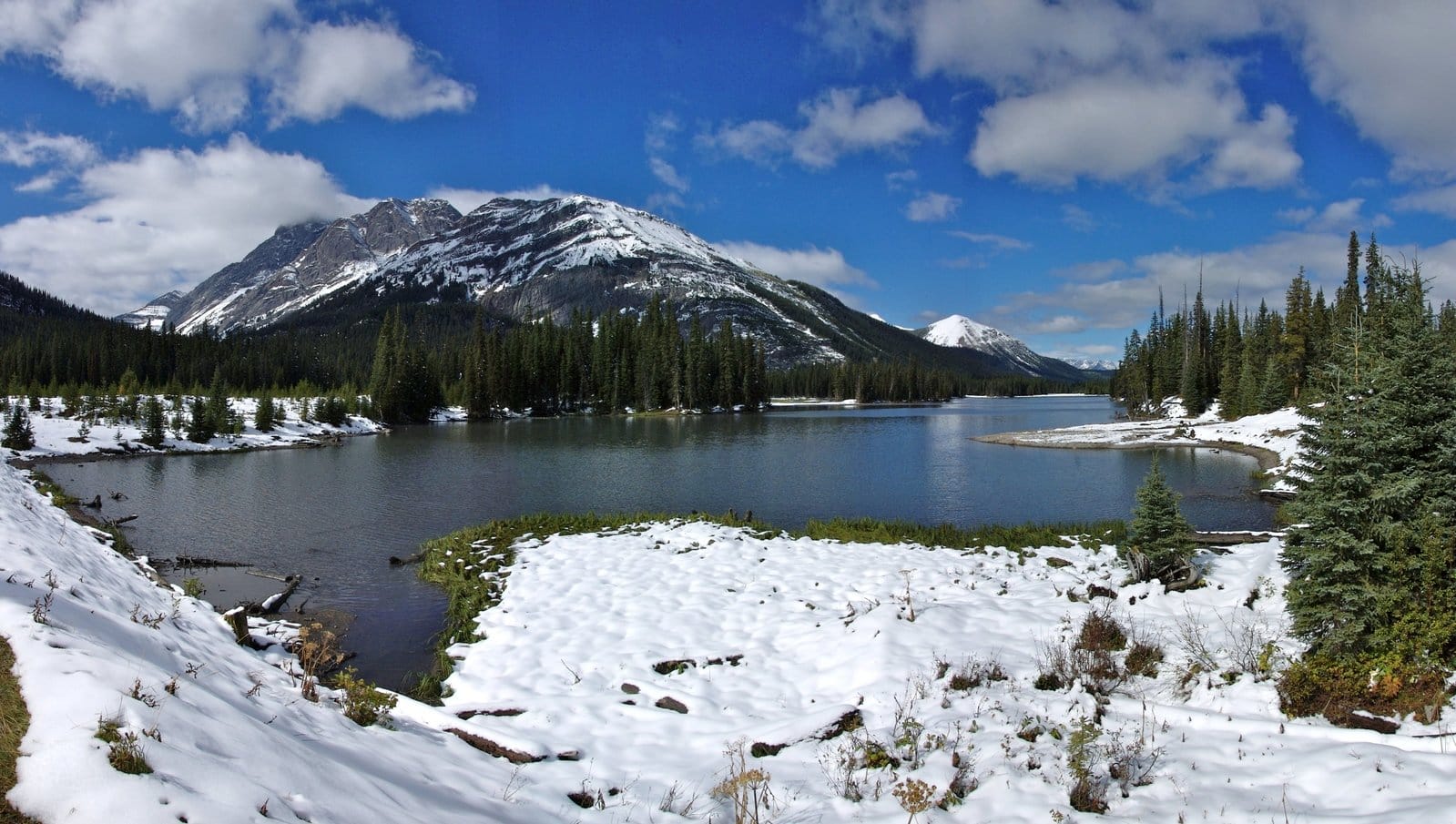
Taking in modern cities, plains, lakes, mountains and icy tundra, Canada is the world’s second-largest country, with an area of 3.9 million
Spanning 3,400 miles between its Pacific and Atlantic coasts and more than 2,800 miles from its southern border with the US to its Arctic Archipelago, Canada is the world’s second largest country by area.
Most film and TV production activity takes place in the southeast provinces of Ontario and Quebec, with their respective major cities of Toronto and Montreal, and in British Columbia, with its urban centre in Vancouver, 2,000 miles away in the southwest.
The Trans-Canada Highway links the main cities in Canada’s southern third, but travel to the northern regions — such as the vast, sparsely populated territory of Nunavut — can be tricky.
The biggest international airports are Toronto Pearson International in Ontario, serving most US cities and many international destinations, Montréal-Pierre Elliott Trudeau International Airport, with non-stop flights to five continents, and Vancouver International in BC, with direct flights to Europe, Asia and Australia.
Contact
Telefilm Canada telefilm.ca/en
Sign up for newsletter
Newsletter