


Norway
Overview and productions
Svalbard is a Norwegian archipelago located between mainland Norway and the North Pole. It has recently served as a key filming location for Paramount/Skydance’s Mission: Impossible — The Final Reckoning and Warner Bros’ Superman. Both big-budget features will be released worldwide this year, underlining Norway’s growing appeal to filmmakers and international producers seeking distinctive, high-impact natural locations.
Superman director James Gunn, who shot the opening sequences on Svalbard, told local outlet Svalbardposten that he “wanted a place that was beautiful and felt like being in the middle of the Arctic”. The production found exactly that.
In recent years, Norway has attracted a steady stream of large-scale international productions and co-productions, supported by a can-do production culture, striking yet accessible locations, and a film incentive offering a 25% rebate on qualifying local expenditure.
Following the success of Roar Uthaug’s Troll - which ranks among Netflix’s most-watched non-English-language films - international interest in Norway has continued to grow, with Troll 2 recently filming in Jotunheimen, often referred to as “the home of the giants”.
The capital city of Oslo also features prominently on screen, including in the Academy Award-nominated Sentimental Value, as well as in several earlier films by Norwegian filmmaker Joachim Trier.
The Norwegian Film Institute (NFI) is the country’s main public financing body, offering a wide range of funding programmes for the development and production of feature films, TV drama, documentaries and games. Minority co-production funding is also available, with priority given to projects demonstrating strong artistic ambition and/or clear potential in the Norwegian market.
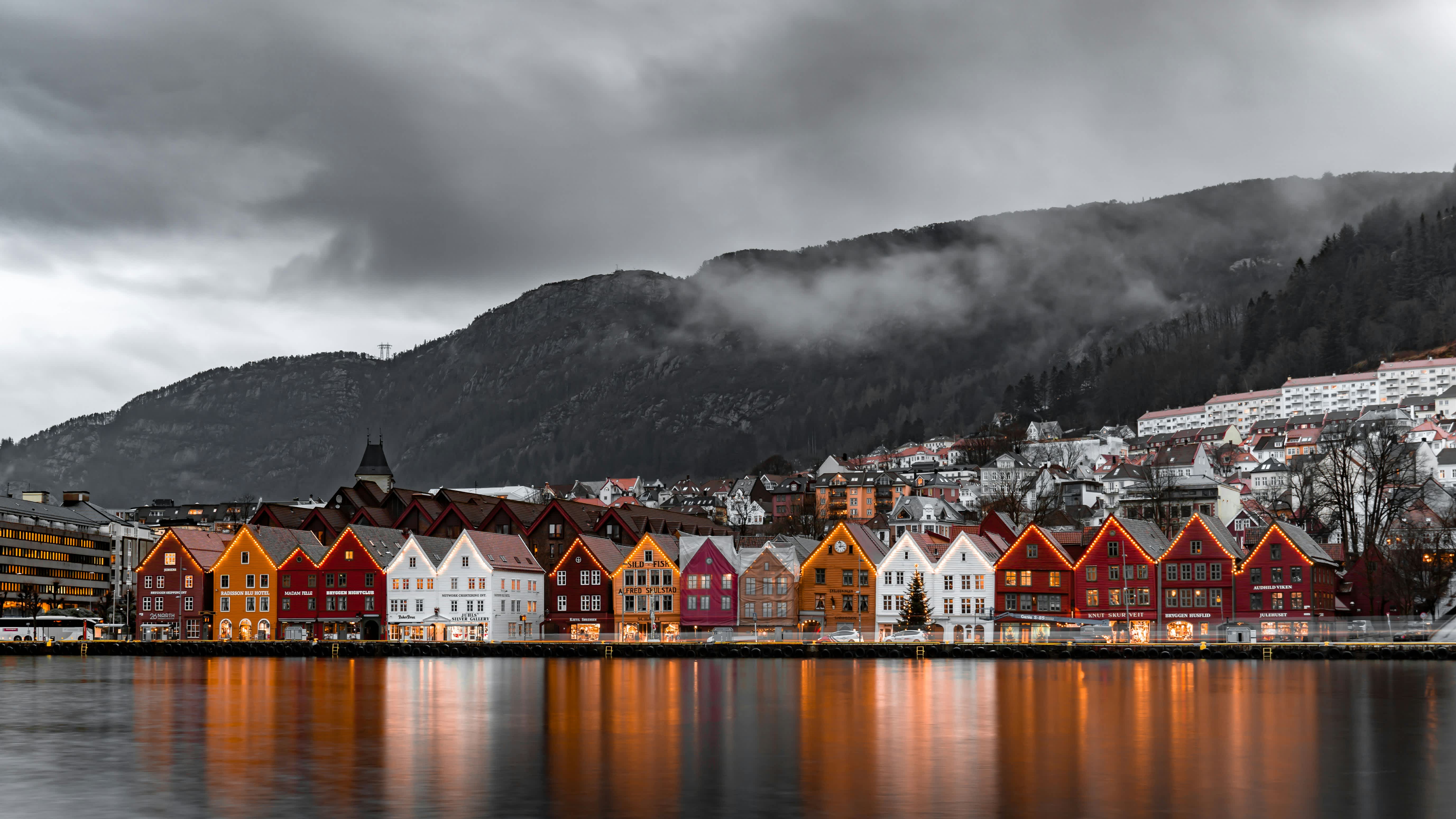
“Regional funding can also be combined with the film incentive,” notes Meghan Beaton, chief executive of the Norwegian Film Commission, an independent foundation based in Bergen that markets Norway internationally as a production destination and supports incoming productions, operating separately from the NFI. In addition to the national commission, productions can expect tailored production support from five regional film commissions across the country.
Norway also operates Sørfond, which provides financing for fiction and documentary co-productions in which the majority producer is based in a Development Assistance Committee (DAC) country. Applications must be submitted via a Norwegian minority producer.
Producer Rebekka Rognøy, whose film Solomamma marks the directorial debut of Norwegian filmmaker Janicke Askevold, helped structure the project as a Norway–Denmark–Latvia–Lithuania–Finland co-production. “Productions can access funding at both national and regional level through a Norwegian co-producer,” says Rognøy. “This makes it possible for smaller films to be realised through international collaboration.”
Norway has also become an increasingly important VFX hub for international projects. Recent credits include Sinners, the first two seasons of HBO’s The Last of Us, Star Trek: Strange New Worlds for CBS, and Netflix’s disaster series La Palma.
Crew and infrastructure
Norwegian crews are highly experienced and fluent in English, with the capacity to service up to three large-scale productions simultaneously. The country offers both purpose-built soundstages and high-quality converted facilities across several regions.
Oslo and the surrounding area host multiple studio facilities, including Gateway, a converted studio offering nearly 2,000 square metres of stage space; Krypton, a purpose-built 423-square-metre soundstage; Dagslys, a five-stage complex ranging from 80 to 500 square metres; FilmParken, with three soundstages between 333 and 450 square metres; and Storyline, which includes an 88.5-square-metre stage.
Bergen’s M12 comprises two converted studios of 540 and 720 square metres, while Film Camp in Tromsø features a converted studio and a 1,750-square-metre backlot.
A wide range of companies provide line production services for international projects, including True North Norway, Living Daylights, Monolith, Norsecode, True West, Film in Norway, All of Norway and PolarX on Svalbard.
Travel and logistics
Although geographically large, Norway is well connected, with more than 40 domestic and eight international airports. Oslo Gardermoen Airport offers direct connections to 26 domestic and 158 international destinations. Ferries and coastal services reach even the most remote locations, and internal transport costs remain competitive by European standards.
First contact: Meghan Beaton, Norwegian Film Commission @ meghan@norwegianfilm.com
Sign up for newsletter
Newsletter