


Slovakia
Overview and productions
Slovakia, a landlocked central European country bordered by established filmmaking neighbours Poland, Hungary, Austria, Czech Republic and Ukraine, has quietly positioned itself as a destination for international film and high-end television productions.
After pushing its cash rebate to 33% in 2020, the country has the Slovak Audiovisual Fund (SAF) in place to allocate production grants for feature and short fiction films, short and feature documentaries and animated short films, along with school and educational audiovisual works. The total support of Slovakia’s cash rebate programme for 2025 was $30m (€25.5m). The total support of the fund (selective and cash rebate) for 2025 hit $41.7m (€35.6m).
Among the high-profile overseas productions to film in Slovakia in 2025 was Apple Original Films action feature Matchbox: The Movie, directed by Sam Hargrave and starring John Cena. Inspired by the Mattel toy line, the film follows a group of friends whose lives take a turn when an undercover CIA agent returns to their small town and embroils them in a globe-trotting adventure.
The production benefited from Slovakia’s 33% cash rebate incentive for international films and shot high-octane car stunts and action scenes in the country over two weeks, with a pair of units shooting simultaneously.
“We picked Slovakia for Matchbox as it offered us majestic mountain highways, bridges and tunnels for a climactic action sequence,” explains US-based executive producer Patrick Newall. “The Slovakian film commission and our service company worked to shut down extended sections of the D1 & D3 motorways for us to shoot with our main and second unit for two weeks.”
The big-budget feature also filmed in neighbouring Hungary and accessed tax rebates there, which were combined with those from Slovakia. Coupled with competitive crew rates, the film enjoyed “great value” on its production. “We were able to stage some highly dynamic aerial shots and our lead stunt pilot Fred North flew his picture helicopter under a large underpass,” says Newall.
The production also secured permission, with help from Slovak Film Commission, to drive a truck off a bridge as part of a chase sequence.
Other projects that filmed in Slovakia in 2025 include Convoy (working title) directed by Henrik Martin Dahlsbakken and produced by Martin Sundland, Catrin Gundersen and Thea Benedikte Karlsen for Fantefilm Fiksjon, with support from the Norwegian Film Institute in collaboration with Film i Väst and FilmInvest.
The Slovakian film and TV industry may not be quite as developed as those in Hungary and Czech Republic, but producers benefit from the enthusiasm and willingness of local crew to go the extra mile to facilitate productions.
“I would recommend shooting there and I would certainly go back,” reflects Newall.
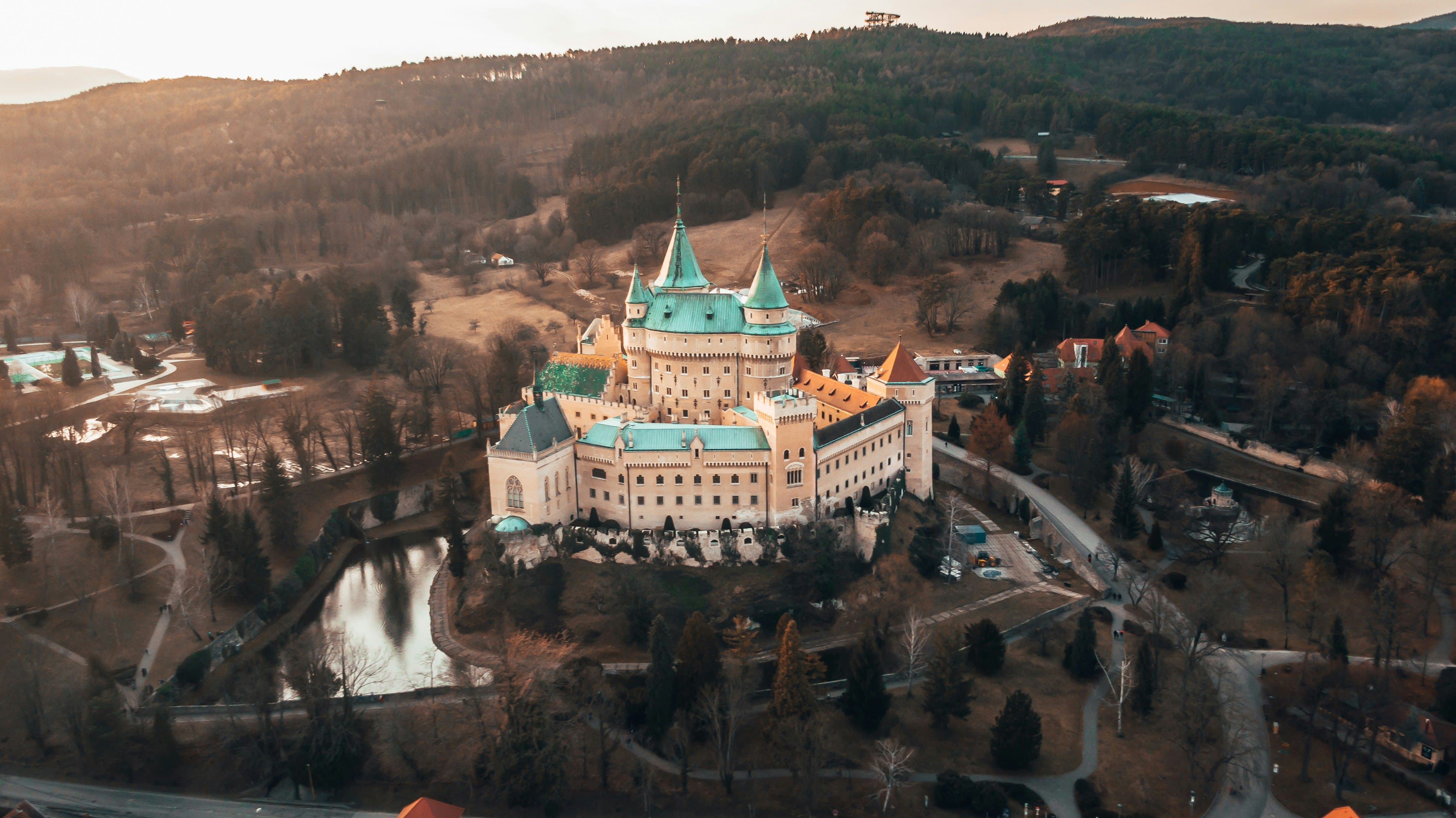
Gallery
Locations and permits
Permits usually take about two days to secure for most locations, and about a week for downtown shoots.
Infrastructure and crew
A4 Studio in Bratislava has stage space measuring 70x30 metres, a Spidercam system, underground corridors for cables and parking for 600 cars. Other sites include Koliba Studios and Shining Studio, but most productions come for the locations. Slovakia’s small multilingual workforce is cheaper compared to other European countries. English is the most widely spoken foreign language, along with German. Most equipment rental companies are in Bratislava, offering grip equipment, generators, cameras, sound and light equipment, as well as cranes. Other kit can be rented from neighbouring Czech Republic, Hungary or Austria.
European status
Slovakia is a member of the European Union and participates in the Schengen Agreement. Its currency is the euro
Travel and logistics
Bratislava has direct flights from cities across Europe, including Paris, Madrid and London. The mid and north of the country are mountainous (Carpathian Curve), with lowlands in the south and east. The Danube River connects to Vienna and Budapest.
First contact: Zuzana Bielikova, head, Slovak Film Commission zuzana.bielikova@filmcommission.sk
Sign up for newsletter
Newsletter