


How ‘The Drama' production designer curated a "lived-in" world all on location
“We wanted the apartment to feel curated and precise, but also like this couple is really living there,” says Zosia Mackenzie.
By Anna Stafford 17 Apr 2026
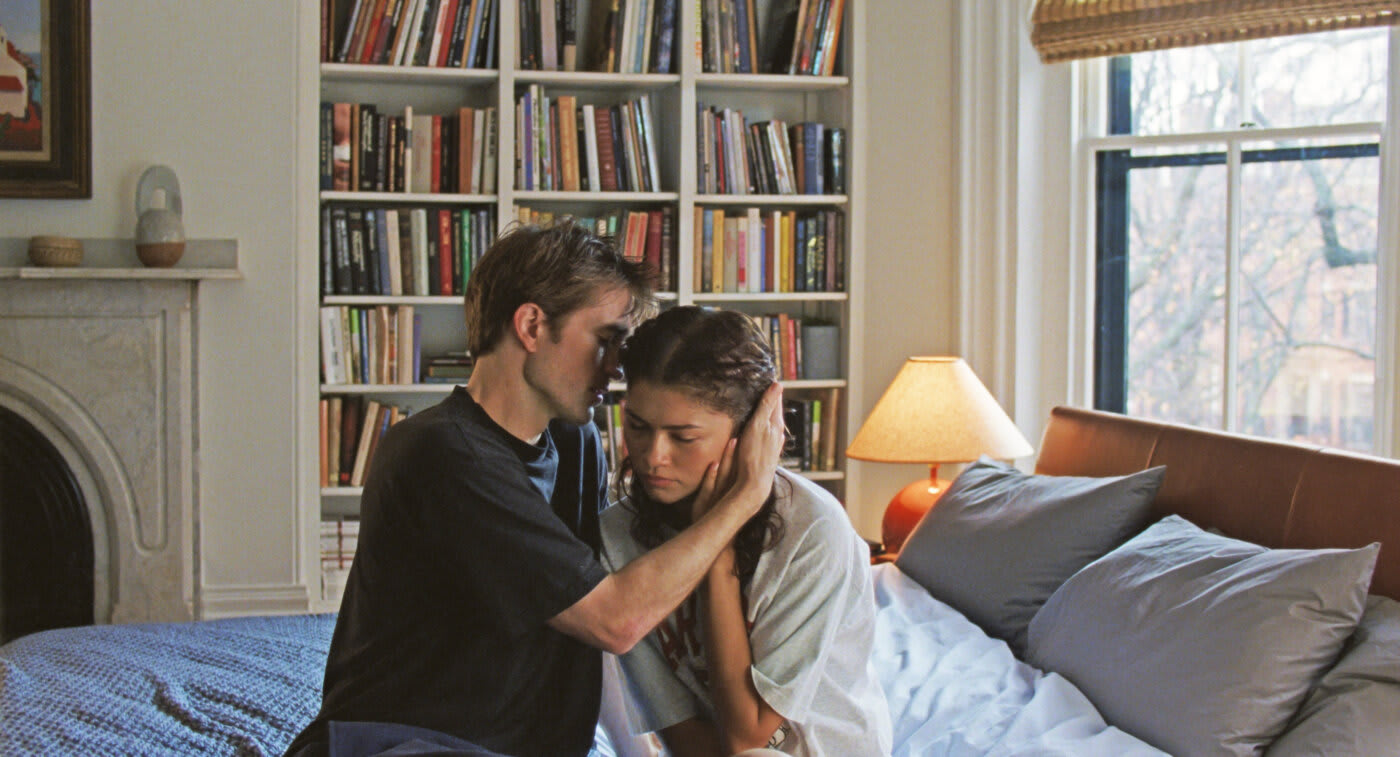
Shot entirely on location across Boston and New Orleans, Kristoffer Borgli’s The Drama relies on real interiors rather than constructed sets. For production designer Zosia Mackenzie, this meant sourcing a real apartment embracing the character of Boston itself, sourcing furniture on Facebook Marketplace, visiting flea markets and collaborating with local artists.
“We wanted the apartment to feel curated and precise, but also like this couple is really living there,” Mackenzie tells Screen Global Production.
The A24 film stars Zendaya and Robert Pattinson as a couple unsettled by truths that surface in the days before their wedding. Reuniting with Borgli after Dream Scenario (2023), Mackenzie wanted to craft a world that balanced curation with realism, layering mid-century furniture, contemporary artwork and handpicked books within a 19th century apartment.
The production designer speaks to Screen about working closely with the locations team to find the protagonists' apartment, navigating the practical challenges of filming inside an operational wedding venue, and the visual references that informed her design.
How did you work with location manager Stephen Hartman to identify key spaces?
A big part of collaborating with the LM [location manager] is sharing references. I'll make a large lookbook with reference images for the whole film. I guess one of the key sets was the apartment. We’re there for a huge portion, and it was the space we needed the most time to dress and prep. There was a family living there, so we had to take out all of their things and safely store them. There are so many meetings about schedules and ins and outs. I don't necessarily need to be in all those meetings, but it helps to understand what your set dec team is pulling off. They're the ones who are dealing with the homeowners, so communication is super important.
What were your criteria when searching for Emma and Charlie’s apartment?
We wanted something that felt quite classic, with great bones, high ceilings, and large windows for our cinematographer [Arseni Khachaturan] who likes to shoot in light. We wanted a sense of history and soul, as opposed to a new build. I'd never shot in Boston before, so I asked the LM if he could send over a Dropbox folder with all the apartments he scouted. That's where we found the apartment we ended up filming in. I knew Kristoffer would love the spiral staircase. He loves to get long shots and there were so many angles to play around with. We were able to utilise the architecture.
How much time did you have to prepare and shoot in the apartment?

We had just under three weeks to prep it, which included moving out all of the furniture, painting throughout and dressing the space. Then we handed over to our director and cinematographer so they could do some shot listing. We were dancing around each other a little bit. We tried to give them the floor, but it's helpful to listen in and hear about the choreography.
How did you make the apartment feel genuinely lived-in rather than styled?
Usually, you start off with a few key pieces. The Knoll chairs were probably the first, and then the sofa. We tried to think about the characters and what kind of artwork Charlie would collect as a curator. He's British, so we collaborated with some European artists. He’s in Boston, so we found a couple of local artists and some from New York and LA as those are fairly large art hubs. Every single book was handpicked, which was time consuming. There's a wonderful store in Boston called Katherine Small Gallery that focuses on graphic and typography books. We were able to get a lot of amazing stuff from them. You don't just go to the designer shops, you go to Facebook Marketplace and antique markets. We brought in a lot of plants for that organic feel and also played around with lighting. Those Noguchi paper lights add an ethereal softness. It’s a big mix like you would find in real life.
Where do you typically find visual inspiration?
It's a mix of film references and digging into some of the older Architectural Digests. There's a great online database for film references called ShotDeck. In terms of design references that feel a bit more lived-in, Apartamento Magazine is really helpful. They really embrace the lived-in spaces, which is something that we tried to do on this.
You previously worked with director Kristoffer Borgli on Dream Scenario (2023). How did your collaboration evolve on The Drama?
We filmed Dream Scenario in Toronto, so it was a different experience because we were in my hometown. In Boston, we were both discovering it together. Once you've already worked with somebody, you have that trust, so the second time we could skip the introductory phase and dive right into the characters and what we're looking to achieve. We know each other's tastes quite well at this point. Working with Kris is wonderful. He has a great way of bringing people together. [Working closely with the director] is critical, especially because there's never enough time. Any extra time you can get with the director and the cinematographer is so helpful.
The wedding scenes were filmed in an operational venue. Did that present continuity challenges?
Definitely. We had to keep moving in and out. There were a lot of meetings between myself, set dec and the locations team, but our first assistant director [Ben Kahn] was critical. I sat down with him to figure out how we could do it in the smartest way possible. There are different stages of the wedding, so there was discussion about how to piece it together in a way that made sense for set dec. It's a bit of a puzzle. One challenge was the florals, because they were all real flowers. Keeping them fresh and spritzing them was difficult but it was so worth it.
How does spending time in a space influence the final layout and dressing?
There's not always the time, but it is important. Sometimes the way it looks on paper isn’t the way it feels in real life. It might make sense for the chair to be there, but then you want it facing another direction because you’re in a conversation room. I think it's nice to live in the space for a moment and let it take shape, especially with the director and the cinematographer because they really know the shots. You need to give the set dec team a floor plan, but there also needs to be some flexibility.
Latest news & features
Promote your services with Screen Global Production
Choose from three profile types - Basic, Silver and Gold
Create ProfileWe offer a range of display advertising opportunities.
Learn More