


Iceland
Overview and productions
Two of the world’s top filmmakers could have bumped into each other in Iceland in June 2025 if they hadn’t been so busy shooting two of the most anticipated releases of 2026: Christopher Nolan with The Odyssey and Denis Villeneuve with Dune: Part Three.
That’s certainly a lot of star power in this tiny island nation with a population of only 400,000.
Nolan had shot in Iceland before — on 2005’s Batman Begins and 2014’s Interstellar. The Odyssey, his Homerian epic with a production budget reported at $250m and starring Matt Damon, shot between February and August 2025 across Morocco, Greece, Italy, Iceland, Scotland, Ireland, Malta and Los Angeles. The Universal Pictures production is the world’s first film to be shot entirely with new-generation Imax cameras.
The Iceland shoot was just under two weeks and said to be the largest production to come to the island since Clint Eastwood’s Flags Of Our Fathers in 2005. The Odyssey welcomed up to 450 Icelandic extras for some of its scenes, shooting at locations including Landeyjahöfn harbour, Hjörleifshöfdi mountain, the river Markarfljot and in the Snæfellsnes peninsula. “There were locations where we shot in where I was just laughing, nobody has any business shooting here,” Matt Damon told an interviewer.
Gallery
Locations and permits
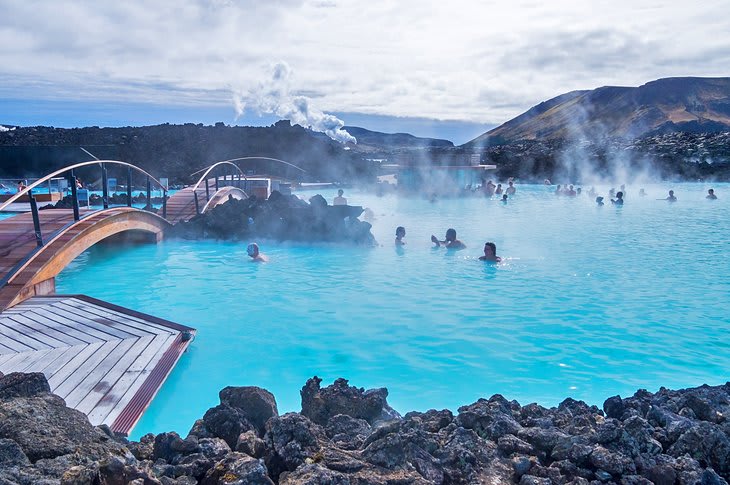
Iceland offers some of the world’s most breathtaking and cinematic landscapes, with dramatic glaciers, volcanic highlands and black sand beaches in locations across the country. Reynisfjara beach in southern Iceland is especially dramatic, and has played host to HBO’s Game Of Thrones and Rogue One: A Star Wars Story. Iceland also has rugged lava fields, waterfalls, lakes and lagoons. The inland highland is a tundra spotted by ponds, active geysers, fumaroles and sulfur mountains.
In addition to its unique and varied landscapes, the light in Iceland makes for longer filming days. Between mid-May and mid-August, the sun sets for around three hours. Despite the country’s reputation for frigid snow, Iceland has a moderate climate year-round thanks to the gulf stream. Winters can be mild and the summers cool, with ideal temperatures from the middle of June through to August. January is the coldest month.
"The contrast of the Icelandic nature and sheer beauty can be overwhelming many times for the directors and the creatives when going on a location scout. It's like taking kids to the toy store. They want everything, and then change their selection again and again," says Bui Baldvinsson at experienced local production servicer providers Hero Productions. "Accessibility to our glaciers and ice caves can be fairly easy with the correct transportation and short distances between locations is what makes Iceland perfect for filming."
Crew and infrastructure
Baltasar Kormakur’s RVK Studios has three studios, including a huge Stage 1 that is 34,400 square feet with a 60-foot ceiling. Just down the road is Truenorth’s Fossa Studios, which has two soundstages totalling 59,000 square feet along with office space. Both are within a 10-minute drive of downtown Reykjavik.
Further infrastructure in Iceland includes posthouse Trickshot and equipment rental company KUKL. Leading production service companies include Truenorth, Pegasus Pictures, Sagafilm, RVK Studios, Hero Productions and Polarama. The country’s VFX capacity is also growing, led by a 40-strong team at RVX.
Crew are highly skilled and speak perfect English — still, most studio productions bring their own heads of department. Crew are famed for their get-it-done attitude.
Travel and logistics
Iceland is a compact 40,000 square miles (smaller than Colorado), with a wealth of striking landscapes sometimes just a short drive from one other.
Keflavik International Airport, less than an hour’s drive from Reykjavik, has daily connections available to many airports in Europe and the US. It takes about five or six hours to fly to Iceland from North America’s east coast, and two-and-a-half to three hours from Europe. Reykjavik has a national airport with short flights to the country’s other main locations.
Contact :
Einar Hansen Tomasson,
Iceland film commissioner
einar@islandsstofa.is
Sign up for newsletter
Newsletter